Check every reference before the client sees it
Invented citations keep reaching courts and client reports. Here is the check any operator can run on an AI-drafted memo, graded.
7 min readEmeri editorial
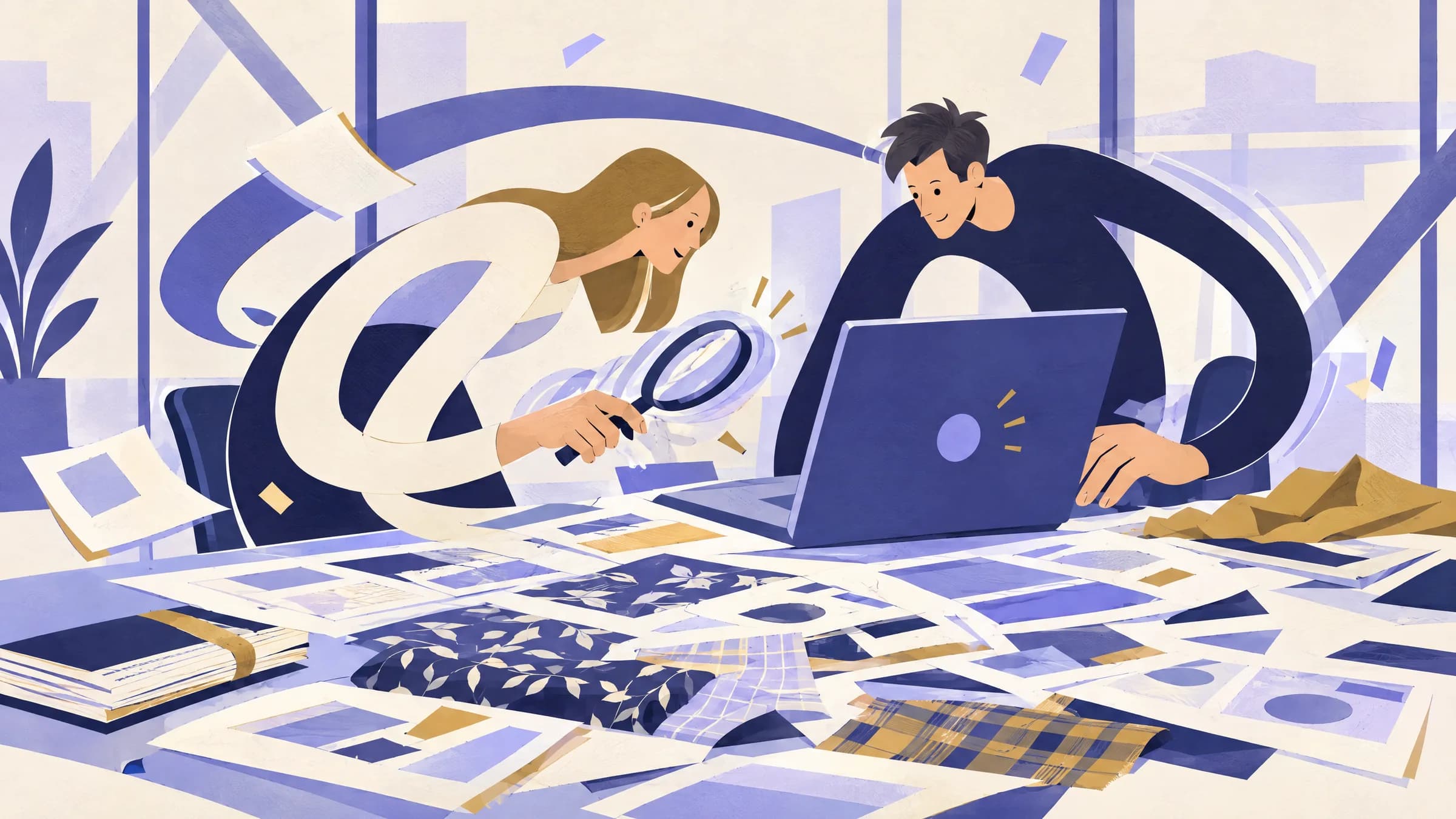
Invented references are still reaching courts and clients. Damien Charlotin's AI Hallucination Cases database listed 2,184 decisions at its October 10, 2026 update. Each entry is a decision in which a court or tribunal dealt with hallucinated material, such as an invented case or a false quote.
What the courts found
On October 7, 2026, Florida's Fourth District Court of Appeal decided Kid International, LLC v. City National Bank of Florida. The appellants' brief cited a case that does not exist seven times and quoted from it. It also attached quotations to real cases that do not contain them. It cited other real cases for points they do not make.
Counsel told the court that the firm used generative AI as one part of its research and drafting. Counsel had also accepted research material from the client to keep costs down. An amended brief still did not fix every error. The court ordered the plaintiffs and their counsel to pay the other side's attorney's fees for the appeal.
verification process failed to identify before filing that certain authorities did not exist, were inaccurately cited, or did not support the propositions attributed
Earlier this year, on March 13, 2026, the Sixth Circuit issued its sanctions opinion in Whiting v. City of Athens. The court found over two dozen fake citations and misrepresentations of fact across three consolidated appeals. Its order to show cause asked counsel whether they had used generative AI and how they had cite-checked the briefs. Counsel did not answer those questions.
The court did not decide whether AI produced the errors. It said the duty applies to any citation, whatever its source. It ordered each of the two lawyers to pay $15,000 to the court. It also ordered them to pay the appellees’ attorney fees on appeal and double costs. It sent the opinion to the chief judge to consider discipline.
Both courts describe the same three failures. A cited source does not exist. A quotation does not appear in the source. A real source is cited for a point it does not make.
This is not only a lawyer problem
In October 2025, Deloitte Australia agreed to repay the final installment of an AU$440,000 contract with the Department of Employment and Workplace Relations. The report, first published in July 2025, reviewed the department's automated welfare penalties. A University of Sydney researcher found a fabricated quote from a federal court judgment and references to research that does not exist.
The revised report disclosed that Deloitte had used Azure OpenAI in writing it. A department spokesperson said the recommendations did not change. The client still received a partial refund.
In May 2026, GPTZero published an investigation of a 44-page EY Canada report on fraud in loyalty programs. GPTZero found that more than half of the report's source titles do not match a real source. It found that almost all of the links were broken or fake. EY Canada withdrew the report and said it was reviewing how it came to be published.
GPTZero also asked ChatGPT, Claude and Perplexity a question about loyalty fraud. All three repeated material from the flawed EY report. An invented source can spread into the next AI answer.
Any operator who sends a client a report, a proposal or a policy summary with AI-drafted references faces the same risk.
The task
An AI tool drafted a two-page client memo with six references. Check it before it goes out.
Re: Risks of launching a customer-service chatbot on your online store.
- A business is answerable for what its chatbot tells customers. In Moffatt v. Air Canada, a tribunal held the airline liable for wrong fare advice from its website chatbot. [1]
- If you sell into the EU, the AI Act says every chatbot “must display a clear AI disclosure banner on every screen at all times.” [2]
- The US National Institute of Standards and Technology requires companies to audit customer-facing chatbots every quarter. [3]
- Retail chatbots give a wrong answer in 18% of refund conversations. [4]
- Courts increasingly treat chatbot refund promises as binding contract terms. [5]
- 61% of customers say they will stop buying from a brand after one wrong chatbot answer. [6]
References, as the AI tool drafted them:
- Moffatt v. Air Canada, 2024 BCCRT 149 (British Columbia Civil Resolution Tribunal, 2024).
- Regulation (EU) 2024/1689 (Artificial Intelligence Act), Article 50(1).
- NIST, Artificial Intelligence Risk Management Framework (AI RMF 1.0), NIST AI 100-1, January 2023.
- Northgate Institute for Customer Systems, Chatbot Error Benchmark 2025, p. 9.
- M. Lindqvist and D. Okafor, “Refund promises made by automated agents,” Quarterly Review of Service Automation, vol. 12, no. 7 (2025), pp. 88–104, doi:10.9999/qrsa.2025.0712.
- Halvard & Pike Research, Customer Trust in AI Service 2026, slide 14.
Emeri’s worked answer
- Start a check log before you change anything. Give each reference one row: the claim it supports, where you found it, whether it exists, whether it supports the claim, whether any quote matches, and the action.
- Find every source yourself, outside the tool that drafted the memo. Use the publisher’s site, an official legislation or court database, or doi.org for a DOI. Search for the reference title only. Keep the client’s name and details out of the search box.
- Confirm each source exists. References 1 to 3 exist. The DOI in reference 5 does not resolve at doi.org. Its journal calls itself quarterly but cites issue 7. A search finds no institute, journal or research firm by the names in references 4 to 6. Mark all three as not found.
- Confirm each real source says what the memo claims. Reference 1 passes: the tribunal held Air Canada responsible for the information its chatbot gave and rejected the argument that the chatbot was a separate entity. Reference 3 fails: the NIST framework describes itself as voluntary and contains no quarterly audit rule.
- Check every quotation word for word against the source. Reference 2 fails. Article 50(1) requires that people be told they are interacting with an AI system, unless that is obvious. The words “banner”, “every screen” and “at all times” do not appear in it.
- Decide keep, fix or cut for each row. Keep claim 1. Rewrite claim 2 as an accurate paraphrase of Article 50(1). Rewrite claim 3 to say NIST publishes a voluntary framework for managing AI risk. Cut claims 4, 5 and 6, or have a person find a real source for each. Do not ask the drafting tool for replacement references.
- Finish the log. Record who checked, the date, and the outcome for each reference. Keep it with the file. Tell the reviewer that the memo lost three claims and that two others were corrected.
Result: one of the six references passed as drafted. Two real sources failed because the memo misstated them. Three sources do not exist.
What would score lower
- Asking the same AI tool whether the references are real. The tool that produced a reference is not an independent check, and GPTZero found mainstream chatbots repeating invented material.
- Confirming that each source exists and stopping there. That catches references 4 to 6 and misses the misstated sources in references 2 and 3.
- Deleting the bad footnotes but keeping the claims. The memo then makes the same unsupported statements with no source at all.
- Pasting the whole client memo into a new tool to check it. That sends client material somewhere it has not been approved to go.
How we scored it
Check a two-page AI-drafted client memo with six references before it goes out.
Checking the work
85/100
- Opens every source outside the drafting tool and tests existence, support and quote wording as separate questions. It catches all five problems. Asking the drafting AI to confirm the references would score about 30. Checking existence only would score about 55.
Keeping it safe
80/100
- Searches reference titles, not client details, and sends no unverified claim to the client. It loses points for not saying what to do if an earlier draft has already reached the client.
Getting real work done
75/100
- Produces a corrected memo and a check log a reviewer can audit. A stronger answer would also draft the short note to the client that explains why three claims were removed.
Giving good context
70/100
- Fixes the Article 50 wording but does not confirm that the client sells into the EU. That fact decides whether claim 2 belongs in the memo at all.
Disclosure: Emeri’s certification grading runs on Claude models.
Sources
- AI Hallucination Cases database. Damien Charlotin, .
- Kid International, LLC v. City National Bank of Florida, No. 4D2025-2599 (opinion). Florida Fourth District Court of Appeal, .
- Whiting v. City of Athens, Nos. 24-5918/5919/25-5424 (sanctions opinion). United States Court of Appeals for the Sixth Circuit, .
- Deloitte to partially refund Australian government for report with apparent AI-generated errors. Associated Press, via Spectrum News NY1, .
- Deloitte to refund government over AI errors. Information Age (Australian Computer Society), .
- Investigation: Hallucinations in Ernst & Young Report on Loyalty Fraud. GPTZero, .
- EY retracts cyber report littered with AI errors. Information Age (Australian Computer Society), .
- Moffatt v. Air Canada: A Misrepresentation by an AI Chatbot. McCarthy Tétrault TechLex, .
- Regulation (EU) 2024/1689 (Artificial Intelligence Act). EUR-Lex, Official Journal of the European Union, .
- Artificial Intelligence Risk Management Framework (AI RMF 1.0), NIST AI 100-1. National Institute of Standards and Technology, .
Researched and drafted with AI. Checked against the sources above and approved for publication by Emeri’s editor. Read our editorial standards.
Every piece we publish is tried on real work and scored against the Emeri standard. See where your own skills stand with the free 15-minute check.
Get Emeri Weekly
AI for business, tested on real work. New tools, releases and how-tos, each tried on a real task and scored. One email a week.
We email you once to confirm. Unsubscribe in one click from any issue. See our privacy policy.
Related reading
Guide
AI literacy training for employees: curriculum, hours and how to check it worked
A workable AI literacy program for employees runs about six to ten hours, split into short modules with hands-on practice. Here is a curriculum, the formats that fit, and how to check learning.
How-to
Why an AI agent costs more with every turn
An agent resends its whole conversation on every call, so cost grows faster than the work. Here is the arithmetic, and the five changes that bring it down.
How-to
AI drafts faster than your team can check it
A study of 718 firms found AI agents raised code output but not finished work, because review became the slow step. Here is how to plan for the checking.